January never feels like a beginning to me.
It feels more like clearing the garden beds - pulling what’s done, loosening the soil, and resisting the urge to plant anything too soon.
After the stretch from Thanksgiving to New Year’s - cookies, casseroles, festive chaos, and the nervous system equivalent of jazz hands - my body doesn’t crave restriction. It craves simple. It craves vegetables. It craves rhythm.
Enter khichdi.
(Or kitchari - same soul, different spelling.)
If you follow me on Instagram, you already know this dish makes frequent appearances. You can watch me make it here:
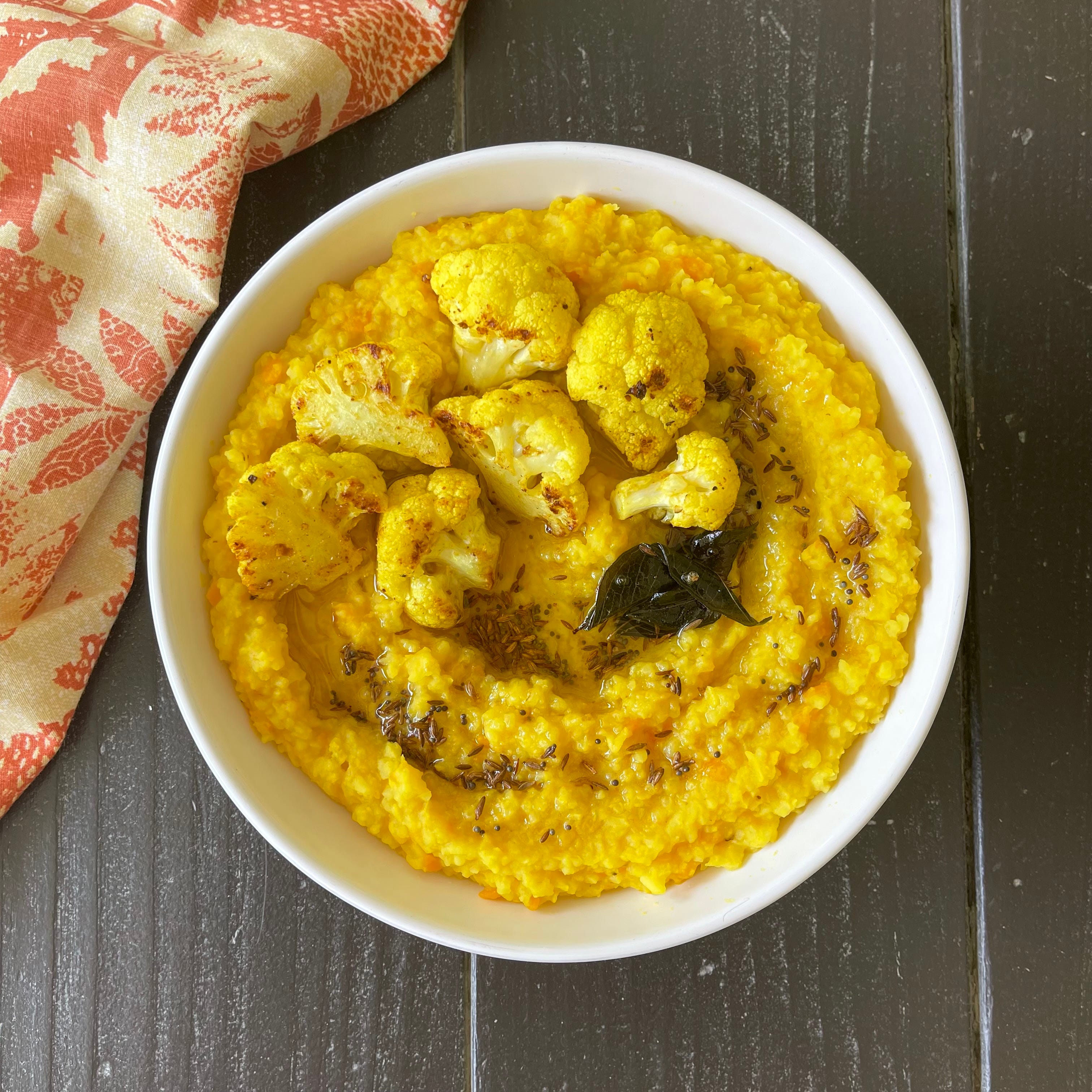
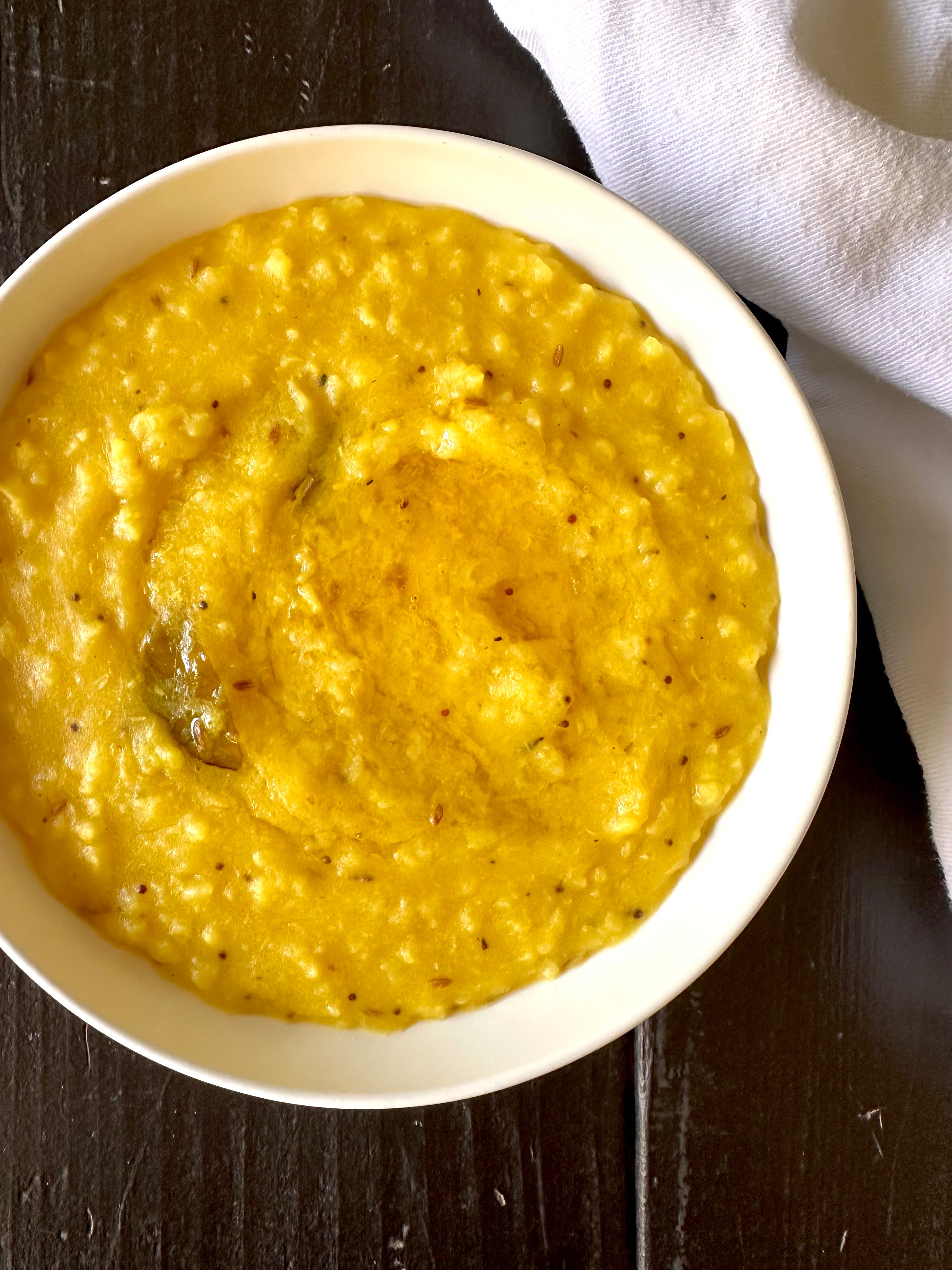
Khichdi is rice and lentils cooked into a soft, creamy porridge, gently spiced, endlessly adaptable, and deeply comforting. It’s one of those foods that feels like it’s doing quiet work behind the scenes - steadying digestion, warming the body, and asking very little of you in return.
In Indian households, khichdi is everyday food. Baby food. Healing food. “I don’t feel great today but I still need to eat” food. In Ayurveda, it’s deeply nourishing and easy to digest - often used during cleansing or times of transition. In my house, it’s simply what we eat when things feel off-kilter and we want to come back to center.
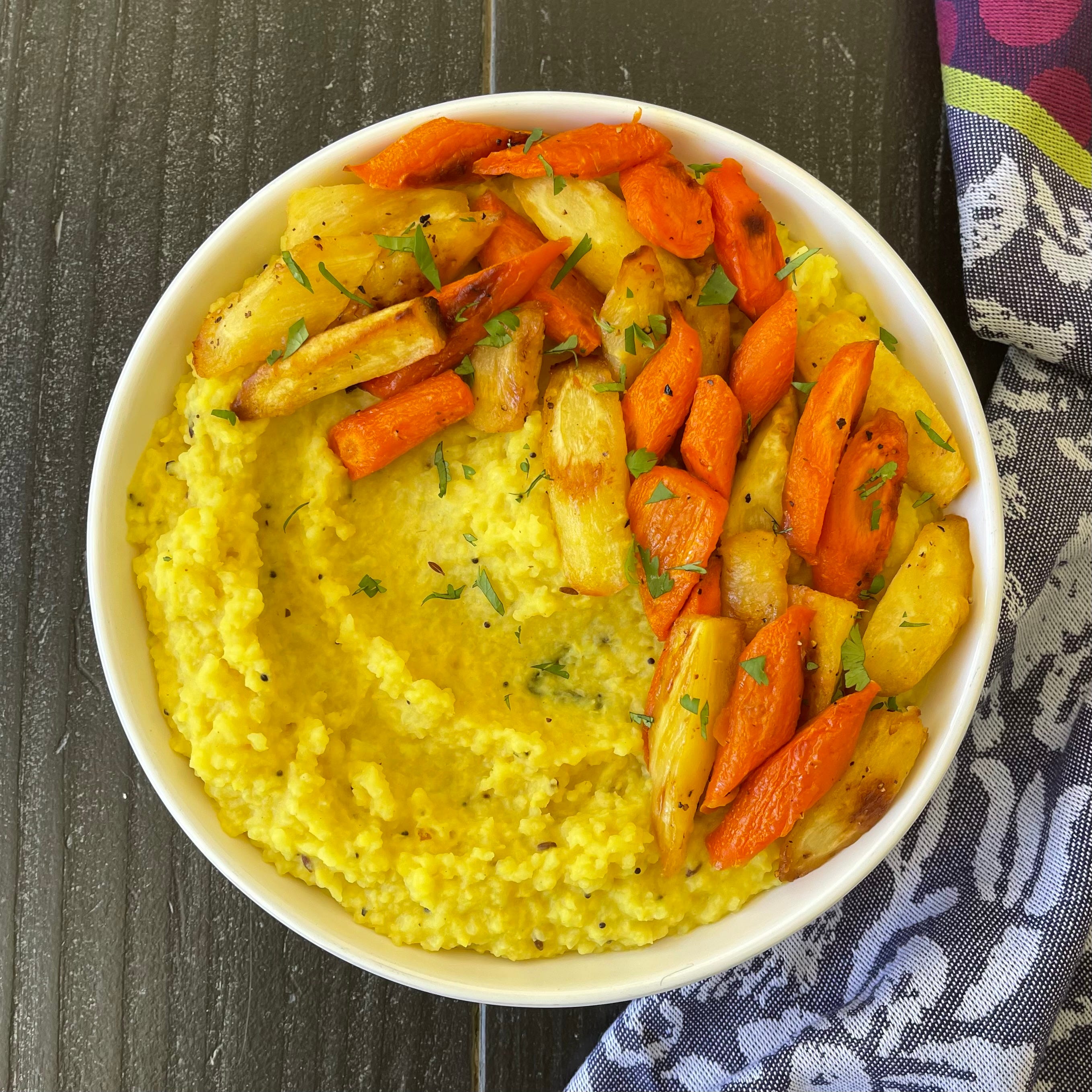
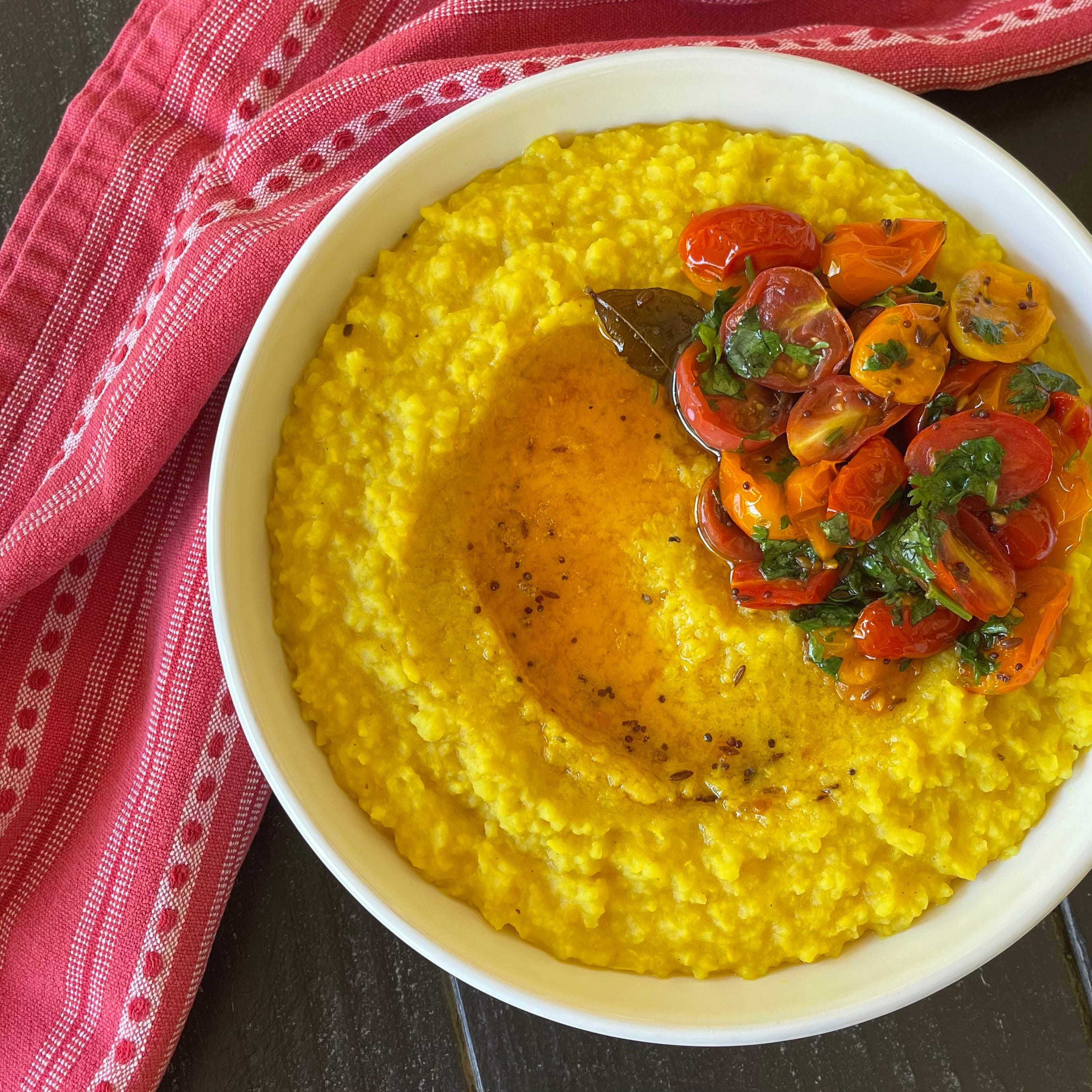
I almost always pair it with whatever vegetables are in season - usually roasted in the oven until caramelized and tender. I’ll spoon the khichdi into a bowl, top it with those veggies, and suddenly dinner feels like both nourishment and comfort food.
This is how I return after the holidays.
Not with a plan. Not with rules. Just consistency. And a pot of sunshine on the stove, keeping my mind happy - food for mood.
Khichdi (Kitchari)
Creamy, comforting, endlessly adaptable.
Ingredients
½ cup moong dal (split mung beans without skin), rinsed and soaked 2 hours or overnight
½ cup Sonamasuri or basmati rice, rinsed until the water runs clear
4 cups water
1 teaspoon Himalayan pink salt (or to taste)
2 teaspoons fresh ginger, finely grated (I use a microplane)
½ teaspoon turmeric
A few grinds of fresh black pepper
Method (or: how to let dinner take care of you)
Rinse + soak your dal.
Rinse the moong dal until the water runs clear. Soak for at least 2 hours - or overnight if you’re thinking ahead (rare, admirable). Drain, rinse, and set aside.
Start the pot.
Add the soaked dal, rice, water, salt, ginger, turmeric, and a few grinds of black pepper to a medium pot. Stir gently - you’re introducing everyone before the long simmer.
Bring to a slow boil.
Bring the pot to a gentle simmer over medium heat. A little foam will float to the surface - simply scoop it away like soft yellow clouds and discard. Once it’s simmering, lower the heat, partially cover (leave a little crack for steam), and let it do its thing.
Let it soften.
Cook for about 40 minutes, no need to stir, until the lentils and rice surrender into a creamy, spoonable porridge. If it thickens too much, add a splash of hot water and keep going. Khichdi is generous that way.
Pause.
Turn off the heat and let it rest while you prepare the tadka - this is where the quiet fills the kitchen with fragrance.
For the Tadka (Tempering)
2 tablespoons vegan butter, ghee, or coconut oil
2–5 fresh curry leaves
½ teaspoon cumin seeds
¼ teaspoon mustard seeds
⅛ teaspoon hing (asafoetida)
Make the tadka (the moment it all wakes up).
Heat the fat.
In a small pan, warm the ghee, vegan butter, or coconut oil over medium heat until it shimmers.
Bloom the spices.
Add the curry leaves, cumin seeds, and mustard seeds. When they begin to pop and perfume the air, add the hing. Stir quickly - this part moves fast and fills up your senses (damn ADD showing up while I’m writing this recipe got me thinking of the John Denver song).
Finish the dish.
Carefully pour the hot, spiced fat over the khichdi. Stir gently, letting the flavors ripple through.
Serve
Spoon into bowls and top with whatever vegetables are in season - usually roasted until caramelized and tender.
Add a handful of cilantro if you like.
Eat warm. Slowly if you can. Be here now, as Ram Dass would say.
Make It Yours
Add ½ cup chopped cilantro at the end
Stir in 1 cup chopped greens (spinach, baby kale, or chard) during the last 5–7 minutes
Top with or serve alongside roasted seasonal vegetables
This isn’t about getting “back on track.”
It’s about remembering what your body already knows.
Warmth.
Fiber.
Rhythm.
Awareness is the practice.🌿