

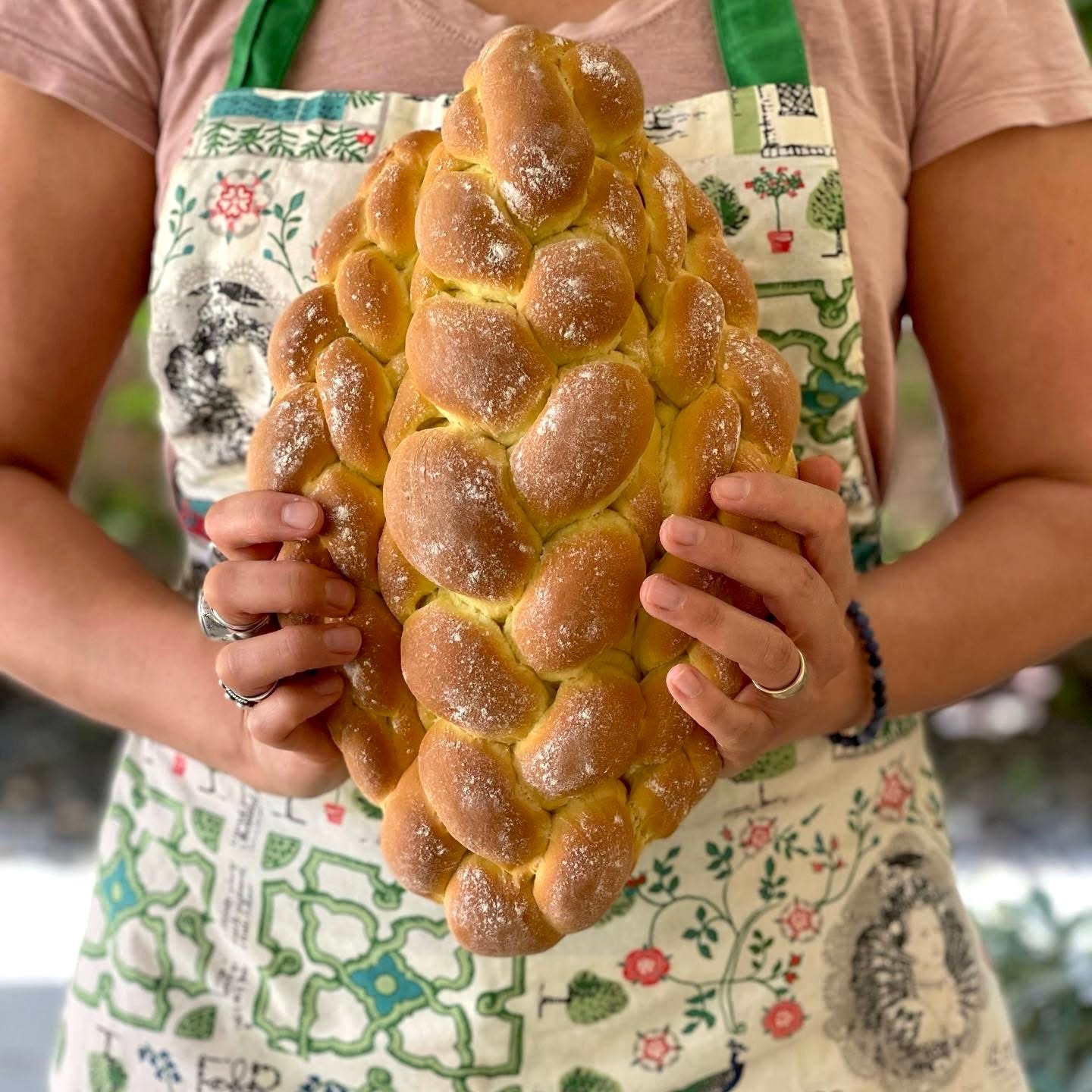
The first recipe I want to share here is one of my favorite rituals: making challah.
I call my practice of breadmaking breaditation—because kneading dough feeds my peace, and eating it feeds my soul.
Back when I was a single mom of two juggling school runs, ballet classes, sports activities, and the occasional existential meltdown, I studied at Le Cordon Bleu. I fell in love with bread—the squish of dough between my fingers, the yeasty perfume, the seemingly little miracles that I pulled out of the ovens. I even dreamed of a bread truck I named Bread Mother (a little ahead of my time—this was before food trucks were cool).
This challah recipe is rooted in that passion and deepened by tradition. I learned the technique in school, but it was my husband’s parents who shared their love of the ritual with me. Now, every Friday, I braid loaves—or sometimes rounds, sometimes rolls—with our twins, making memories, honoring tradition, and baking a little more love into the world.
Check the twins out making challah on Instagram: https://www.instagram.com/reel/Ci3kG_0pFrW/?utm_source=ig_web_copy_link&igsh=MTlycW9wNTh1N2c1Mw==
Makes 2 loaves
Ingredients
2 ½ cups water (I use cold water from the tap)
2 packets active dry yeast
4 heaping Tbsp organic sugar
8 cups organic all-purpose flour (King Arthur brand is my fav), plus extra for dusting hands & table
1 Tbsp kosher salt
½ tsp turmeric (optional, gives the crumb a sunny glow)
⅓ cup avocado oil (or neutral oil), plus extra for greasing
2 Tbsp vanilla soymilk (or plant milk of choice)
2 Tbsp sesame seeds
Gram weights for those who prefer precision:
525g water
14g yeast
75g sugar
1000g flour
16g salt
70g oil
Method
Wake the yeast. Combine water, yeast, and sugar in a large bowl. Let it sit 5 minutes until foamy. If it doesn’t froth, your yeast has clocked out—start fresh.
Build the base. Add flour to yeast mixture, cover with a kitchen towel, and rest 20 minutes. This pause lets the flour hydrate and gives your dough a head start on its glow-up.
Add flavor. Mix in salt, turmeric, and oil. Turn dough out onto a floured surface and knead, by hand until smooth and elastic —like a baby’s bottom (~roughly 10 minutes).
First rise. Shape the dough into a ball and place it in a bowl greased with a little oil—don’t forget a light coat on top of the dough too! Let it nap for 1 hour or so, until doubled. Inhale that yeasty perfume, watch it grow, and exhale the week.
Divide + rest. Punch down, divide into 6 equal pieces, shape into balls, cover, and let rest 10–15 minutes. This bench rest relaxes the gluten so rolling ropes feels effortless.
Shape. Roll each ball into a long rope (~about the length of your sheet pan). Braid 3 ropes together and pinch ends. Repeat with the other 3 ropes. Place on parchment-lined sheet pans.
Second rise. Cover and let puff 25–40 minutes. Test by pressing gently with a knuckle: if it springs back slowly and leaves a small dent, it’s ready. Think marshmallow vibes, beautiful.
Wash + sprinkle. Brush lightly with plant milk, then scatter sesame seeds. Too much liquid = soggy top; go light-handed and keep your zen.
Bake. 350°F for 30–40 minutes, rotating tray if necessary. Loaves should be bronzed, fragrant, and sound hollow when tapped.
Cool (or not). Let rest at least 20 minutes (if your willpower allows). Tear, toast, or gift—the loaves forgive impatience.
Shape It Your Way
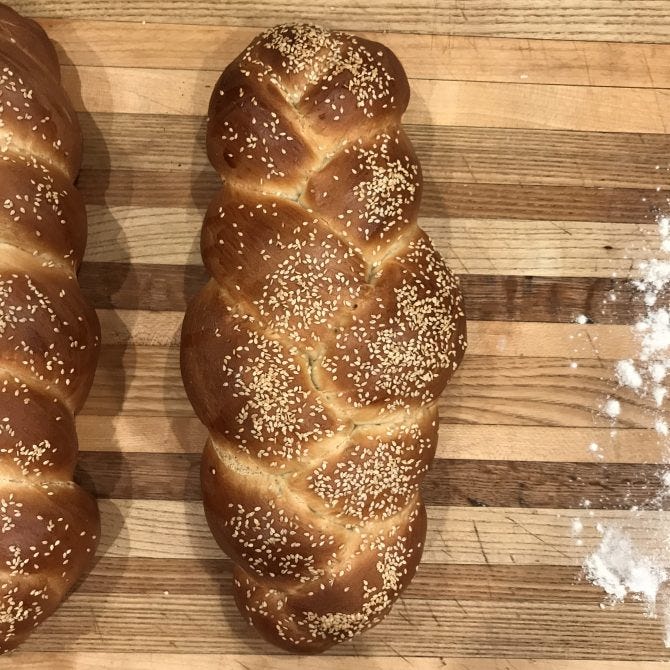
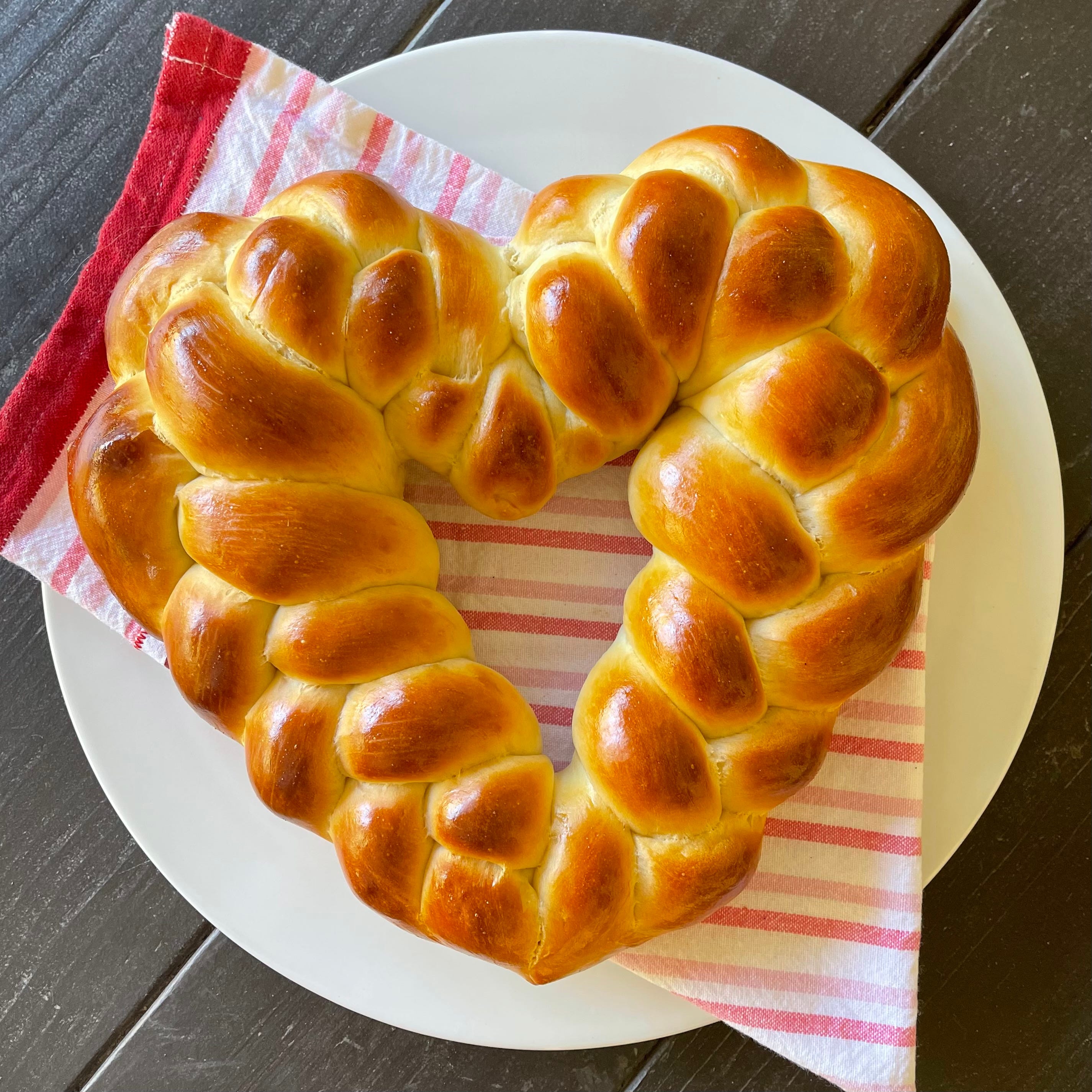
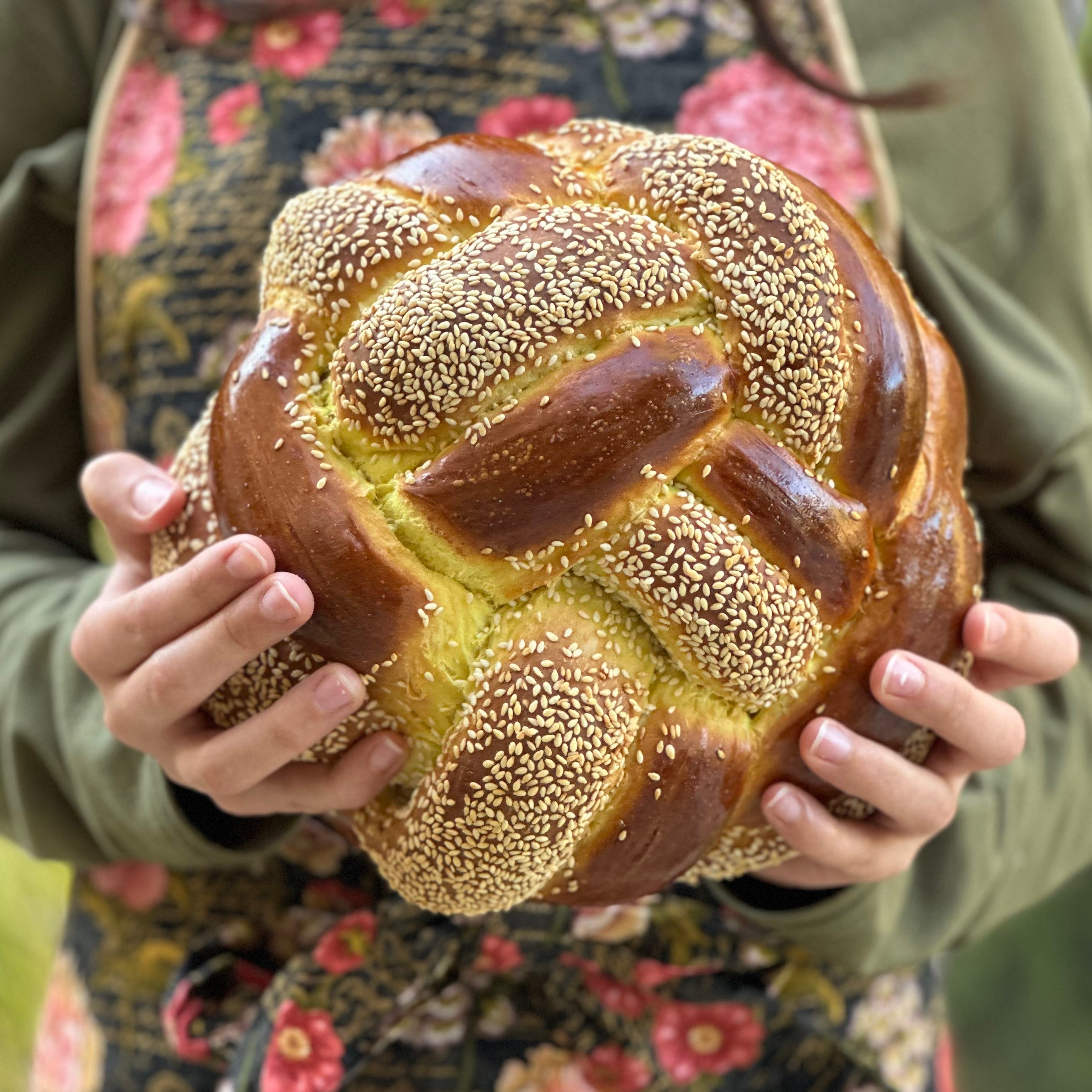
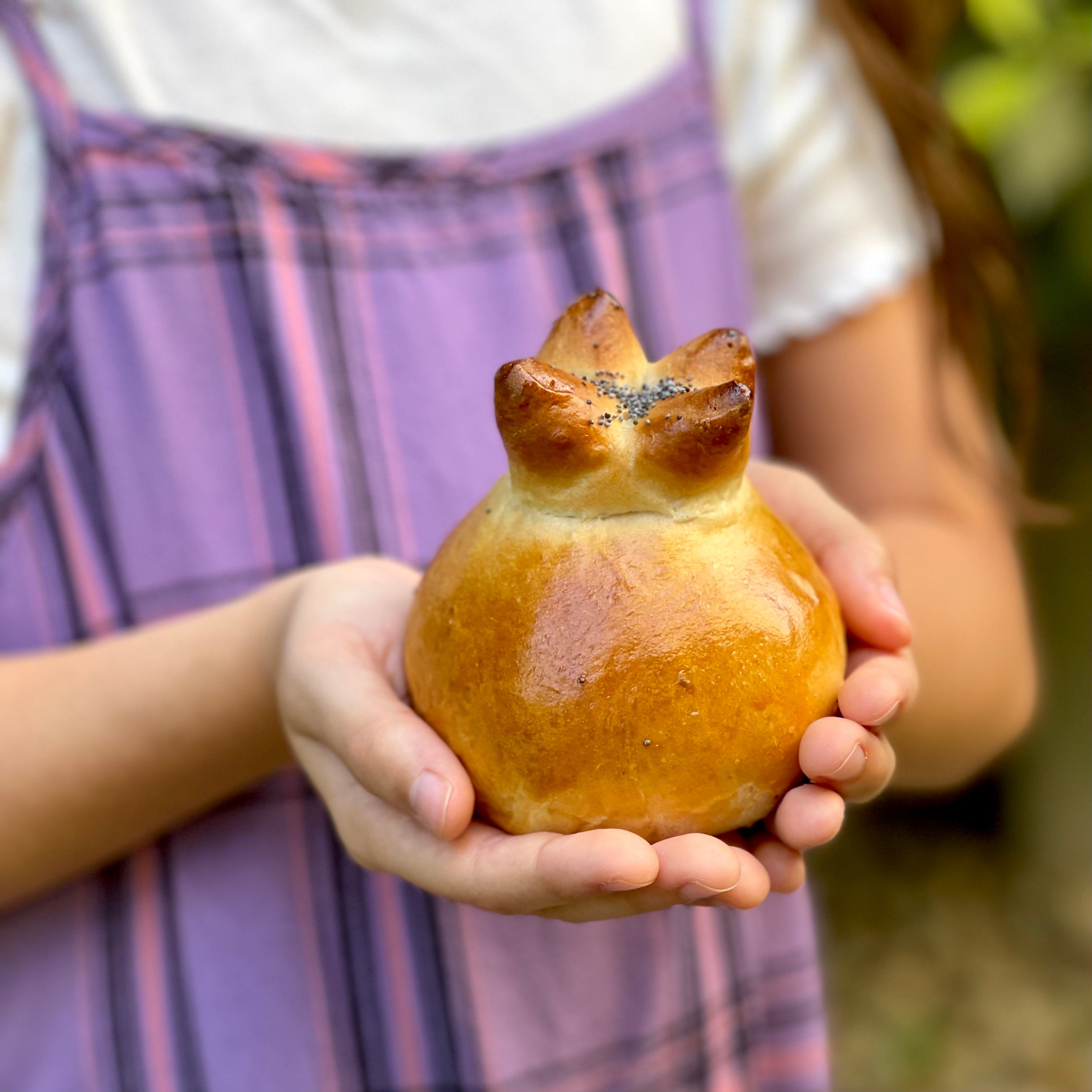
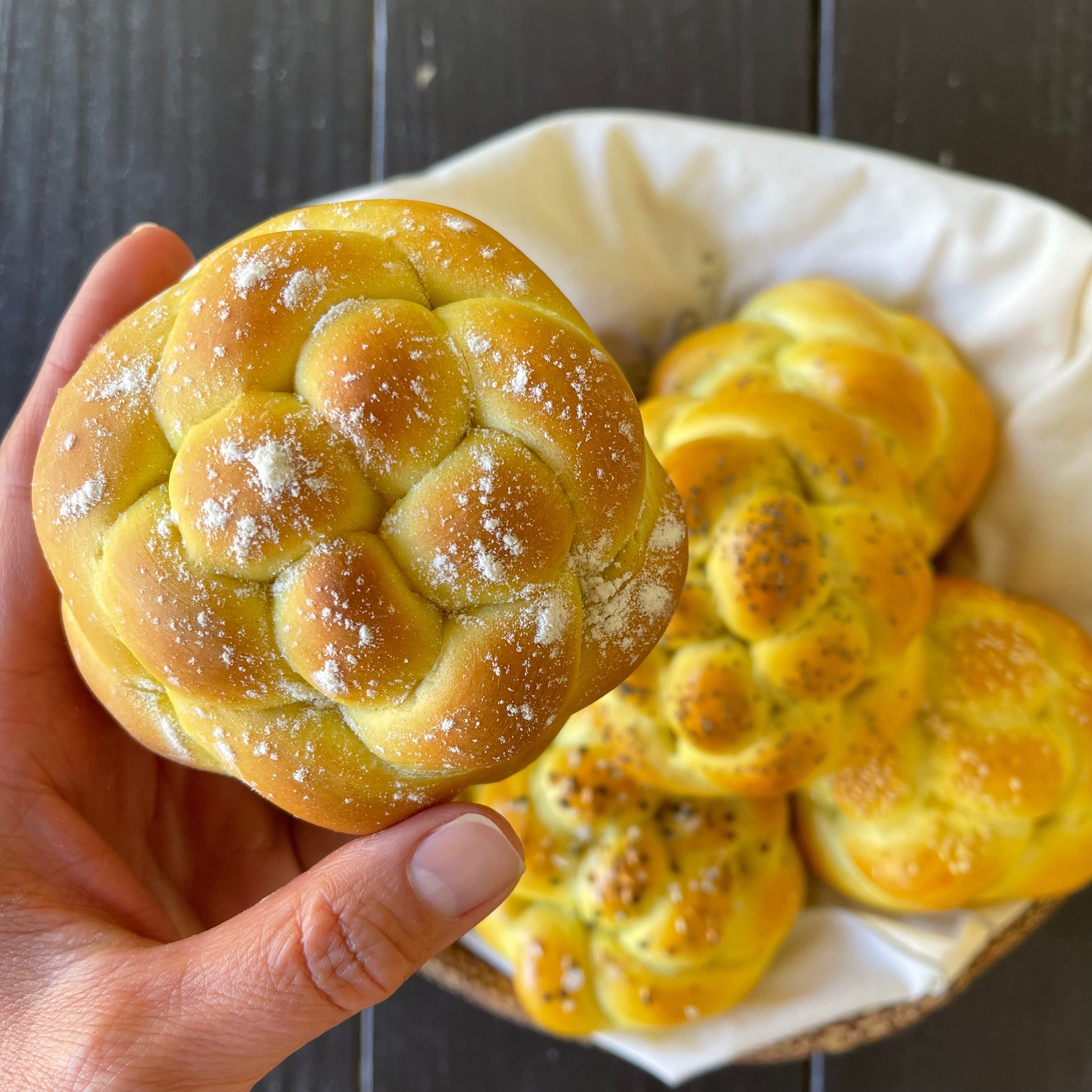
Braiding, rolling, twisting, rounding—the options are endless. Photos below show a few of my favorites, but remember: even the lopsided ones bake up golden and gorgeous. Play with it. Laugh at your mistakes. This is baking therapy.
Tips from My Kitchen
Nesting 2 sheet pans prevents over-browned bottoms.
Flour sparingly—dry dough is sad dough.
Plant milk wash alternatives: pineapple juice, diluted maple syrup, or the good ole egg wash if you want sheen.
A scale helps with even strands, but if you prefer “Livin’ On The Edge”🎵 like the Aerosmith song—eyeball bravely.
Oven temperamental? Rotate trays halfway through.